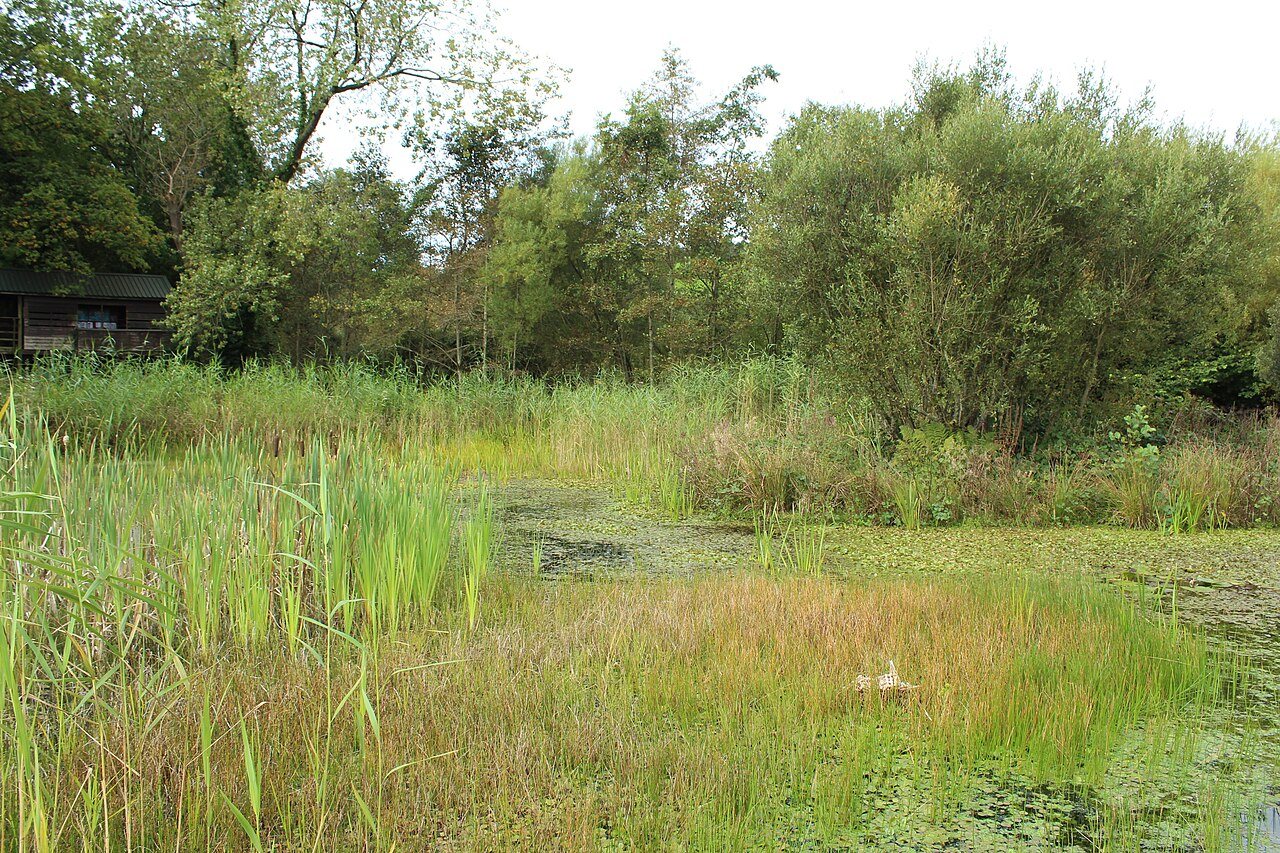
Aldouran Wetland Garden lies at the edge of Leswalt, with the Aldouran Burn and woodland forming part of its setting. It is a useful alternative to a day built around distant headlands. The garden, wetland and woodland should be thought of as related areas with different conditions, rather than one uniform surfaced route. Decide how far to explore after considering the weather, ground and everyone in the group.
Begin with the community garden
The operator describes raised stone planting beds connected by all-ability paths in the community garden. That gives a concrete starting point for planning, but it does not establish that every woodland extension has the same access characteristics. If a particular surface, gradient or entrance dimension matters, ask before travelling.
Look at the contrast between tended planting and wetter habitat nearby. A slow look at leaf shapes, seed heads or insects can be a complete activity without a long walk. Keep off the beds and leave plants where they are, even when a specimen would make an appealing photograph.
Use the hide as a place to wait
The wetland includes a boardwalk and bird hide. Enter quietly and give other visitors space to see. Wildlife may appear, but a hide is not a promise of a particular bird or red squirrel on demand. Allow a little stillness before deciding there is nothing to notice.
Binoculars are useful for looking at movement or features at a distance. First locate the subject with your eyes, then lift the binoculars while keeping your gaze in place. If nothing is visible, notice the vegetation, water and sounds instead of trying to draw animals closer with food or noise.
Keep the woodland as an option
Check signs and conditions before continuing towards the glen. After rain, a longer natural-surface route may be less convenient than a pause in the garden. Families can agree to decide at the transition rather than promising the full extension in advance.
Bring away all picnic waste and use any seating considerately. A wetland visit is especially suited to a short notebook entry: one plant feature, one sound and one question for later identification. It creates a record without needing to collect anything or finish a checklist of sightings.
A couple of practical questions
Is the whole site guaranteed step-free?
The operator specifically describes all-ability paths in the community garden. Ask about the exact route you intend to use; do not extend that description automatically to boardwalks or woodland.
Must I bring binoculars?
No. They can help with distant wildlife, but observing planting and listening quietly are worthwhile without equipment. Use what you already have rather than buying something for a single stop.