A short walk around Stranraer or the Rhins should leave room for looking around, not just for reaching the end. Distance is only one part of that decision. A firm town path, a muddy woodland stretch and a cliffside section can take very different amounts of effort over the same length. Start by naming what the group wants from the outing: a sea view, a nature pause, a village look or a little time outdoors between other plans.
Choose the setting before the route
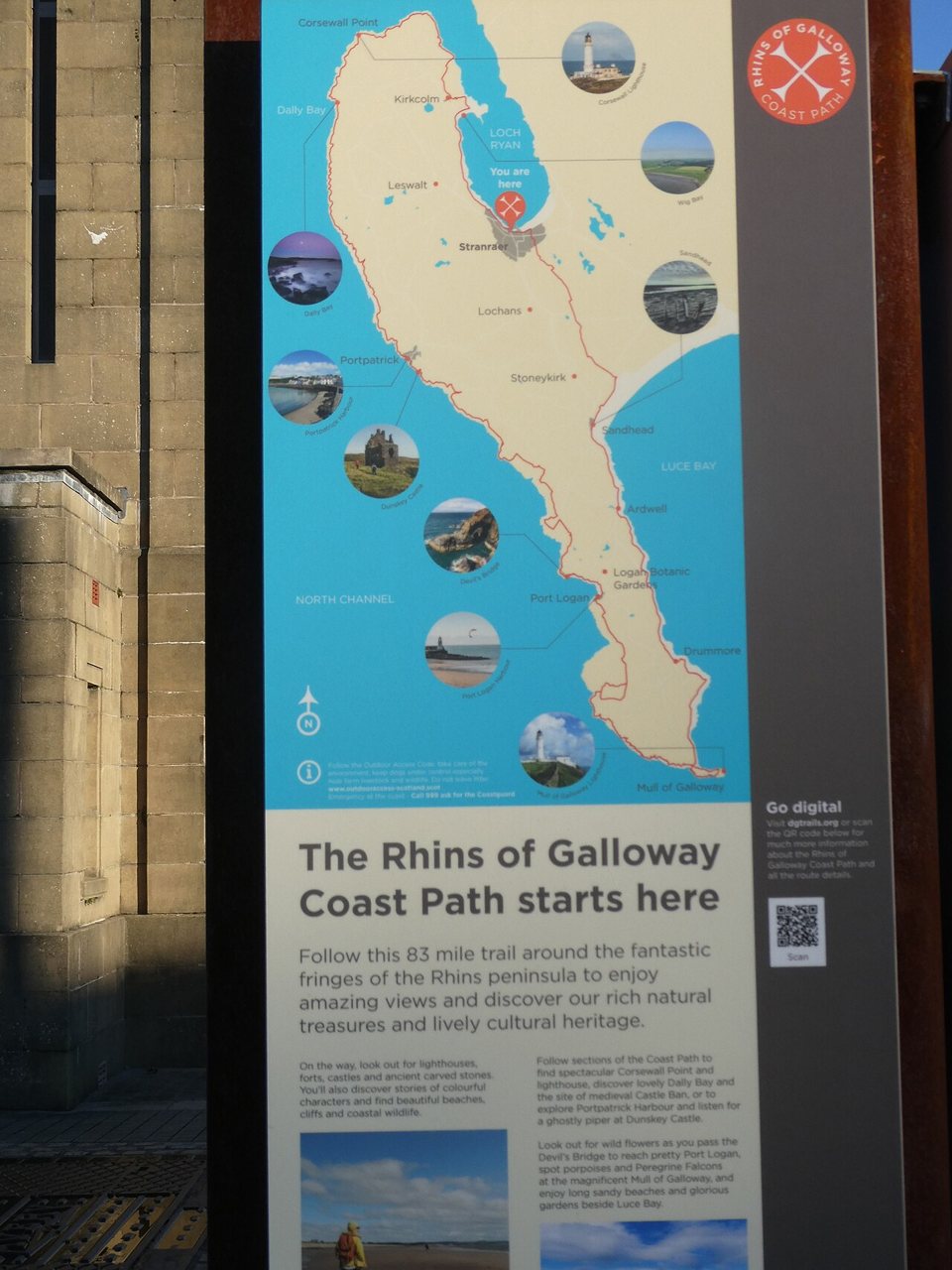
For a town-based pause, look for a route that lets you return easily to central Stranraer. For a more rural visit, the official Rhins Coast Path information lists five short circular walks at Wig Bay Sands, Dunskey Glen, Ardwell Bay, the Mull of Galloway and Sandhead. Read the individual descriptions: the names do not imply identical surfaces or exposure.
A route with a bench or a view only at its far end may not suit someone who wants frequent breaks. Check where pauses can actually be made without blocking a path or standing close to an edge. Include the walk from the parking place or bus stop in the total effort.
Ask what could change the plan
Rain can make ground soft, wind can make an exposed viewpoint uncomfortable and tide can alter a shore-based option. Use the current weather information and route notices. If the most difficult part comes late in a circuit, consider whether an out-and-back with an earlier turning point would be easier to manage.
A small group may have different preferences about steps, dogs, narrow paths or busy roads. Discuss the limiting feature before leaving. A person who comfortably walks a given distance on pavement may still find uneven coastal ground tiring; the route needs to suit the surface as well as the distance.
Keep a useful return margin
Set a time by which you will turn or finish, allowing for photographs and slow sections. If meeting a bus, plan for a service before the final possible return rather than assuming a perfect walking pace. Carry water and a suitable layer even when the planned distance feels modest.
At the end, record what made the route work for your group: where it was exposed, whether the surface suited you and which pause was useful. That is more helpful for a future visit than a claim that the walk was universally easy.
A couple of practical questions
Does a short circular walk always need less planning?
No. It removes the need for a separate return journey, but the whole circuit still has to be completed unless there is a suitable exit. Terrain and conditions remain important.
How can I choose for a group with mixed walking confidence?
Use the least comfortable person's requirements to select surfaces and a turning point. A modest route with optional extra walking afterwards is easier to adapt than a circuit with an unavoidable difficult section.