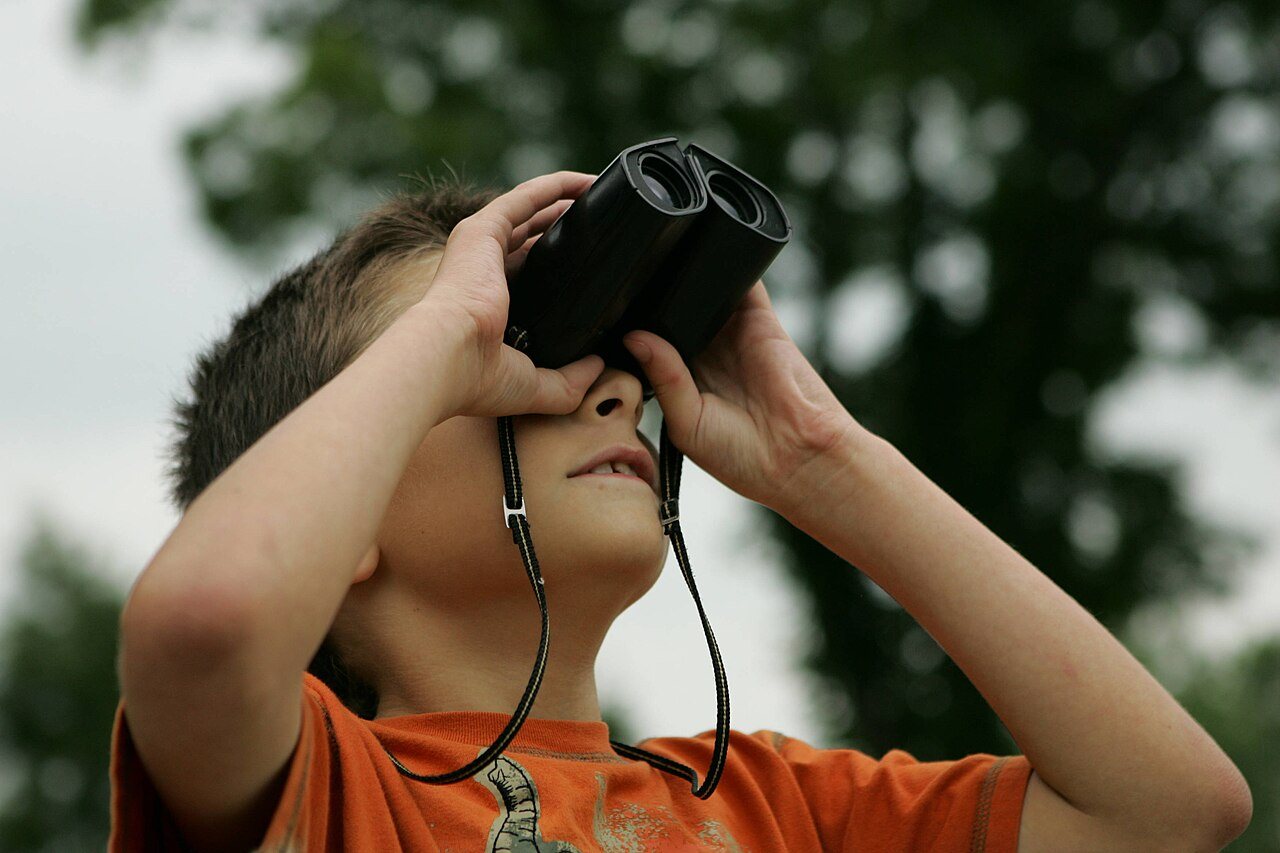
Binoculars help you watch shorebirds without moving closer, but an unfamiliar pair can initially show little more than a wobbling blur. Practise before the visit with a stationary subject from a safe position. There is no need to buy new equipment to begin birdwatching around Loch Ryan. A borrowed pair that feels comfortable, together with patient observation, can be enough for a first outing.
Fit the view to your eyes
Adjust the hinge until the two circular views merge into one comfortable image. Set the eyecups according to the binoculars' instructions and whether you wear glasses. If the model has a separate dioptre adjustment, follow its manual rather than repeatedly changing controls at random.
Focus on something that is not moving before trying to follow a bird. The RSPB's binocular guide emphasises comfort and accessible controls; these are practical advantages when you are learning. Do not look at the sun through binoculars, and keep the strap arranged so the pair cannot fall while you adjust it.
Find the bird before lifting the binoculars
Look with your unaided eyes first. Choose a landmark behind or beside the bird, keep looking at that point and raise the binoculars to your eyes. Searching the whole shoreline through a magnified narrow view is often frustrating.
Stand still on firm ground with room for other people to pass. If the image shakes, a comfortable supported position may help more than trying a higher magnification. Stop looking through the binoculars before moving; walking while the view is magnified makes it harder to judge the ground.
Observe features before assigning a name
Notice size relative to nearby birds, shape, bill, posture and behaviour. Write a few details before checking a guide. A distant bird in poor light may remain unidentified, which is preferable to a confident guess.
Keep your distance and follow the Birders' Code. If birds stop feeding, become alert or move away because of your presence, back off. Binoculars are useful precisely because they reduce the need to approach, whether you are beside a sea loch, in a hide or on a coastal path.
A couple of practical questions
Do I need the strongest magnification available?
No. Strong magnification can make locating a bird and holding a steady image harder. For a first outing, use a comfortable pair and learn its controls before considering an upgrade.
Is an unidentified bird a failed observation?
No. A note about shape, movement and habitat is still useful. You can compare it with a guide later, keeping any uncertainty rather than forcing an identification.