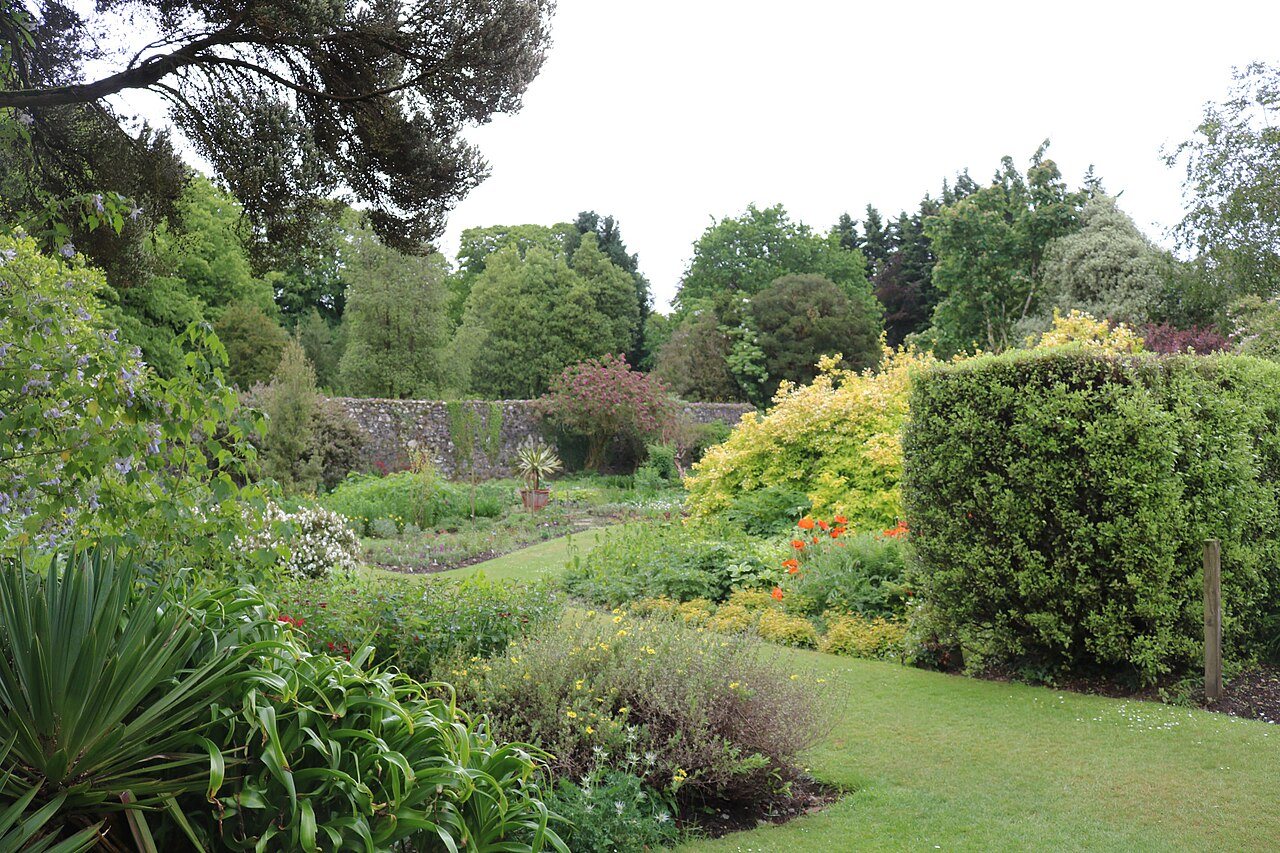
Castle Kennedy Gardens is a large landscape of avenues, shaped ground, water and planting arranged around a ruined castle. Visitors who expect only flower beds may miss how strongly the garden directs movement and views. Start with the map and choose a manageable part of the design to explore carefully.
Use the ruin as an orientation point
The old Castle Kennedy stands within the gardens, between the Black and White Lochs. It helps give the wider landscape a centre, but should not be confused with the later Lochinch Castle. The latter belongs to a different period and is a family home, not an assumed interior stop on a garden visit.
From the public visitor route, notice how a building appears and disappears as trees and landforms frame it. A long sightline can make a distant feature seem close; consult the path map before setting off towards it if distance or gradients matter to your group.
Read the earthworks and avenues
The garden's history includes major work under the second Earl of Stair in the eighteenth century, followed by later restoration and planting. Terraces, mounds and avenues are therefore part of the historical fabric, not just convenient routes between trees.
Compare a straight avenue with an area that feels more enclosed or irregular. Ask what each invites you to look at. You need no specialist vocabulary to notice symmetry, changes in height or the way water catches light at the end of a view. Those observations help make sense of a designed landscape.
Leave room for a seasonal focus
Plant collections add another layer, with rhododendrons, azaleas and other trees and shrubs contributing at different times. Check the garden's current information for what is of interest rather than building a visit around one flower photograph. Weather can shift the timing and appearance of a display.
For a shorter visit, choose one or two linked features and a comfortable return. If you want to picnic or use refreshments, check the current visitor arrangements and bring what you need. A large garden becomes easier to enjoy when the plan includes time to sit and look, instead of treating every avenue as a distance to cover.
A couple of practical questions
Can I see the whole garden quickly?
Its scale and variety favour a selective route. Use the official map to choose a compact visit around the features that interest you, particularly if walking distance is limited.
Are the lochs simply ornamental ponds?
They are substantial features of the surrounding landscape, while the garden also contains designed water features. Keeping those elements distinct helps you read the layout and navigate the visitor routes.