
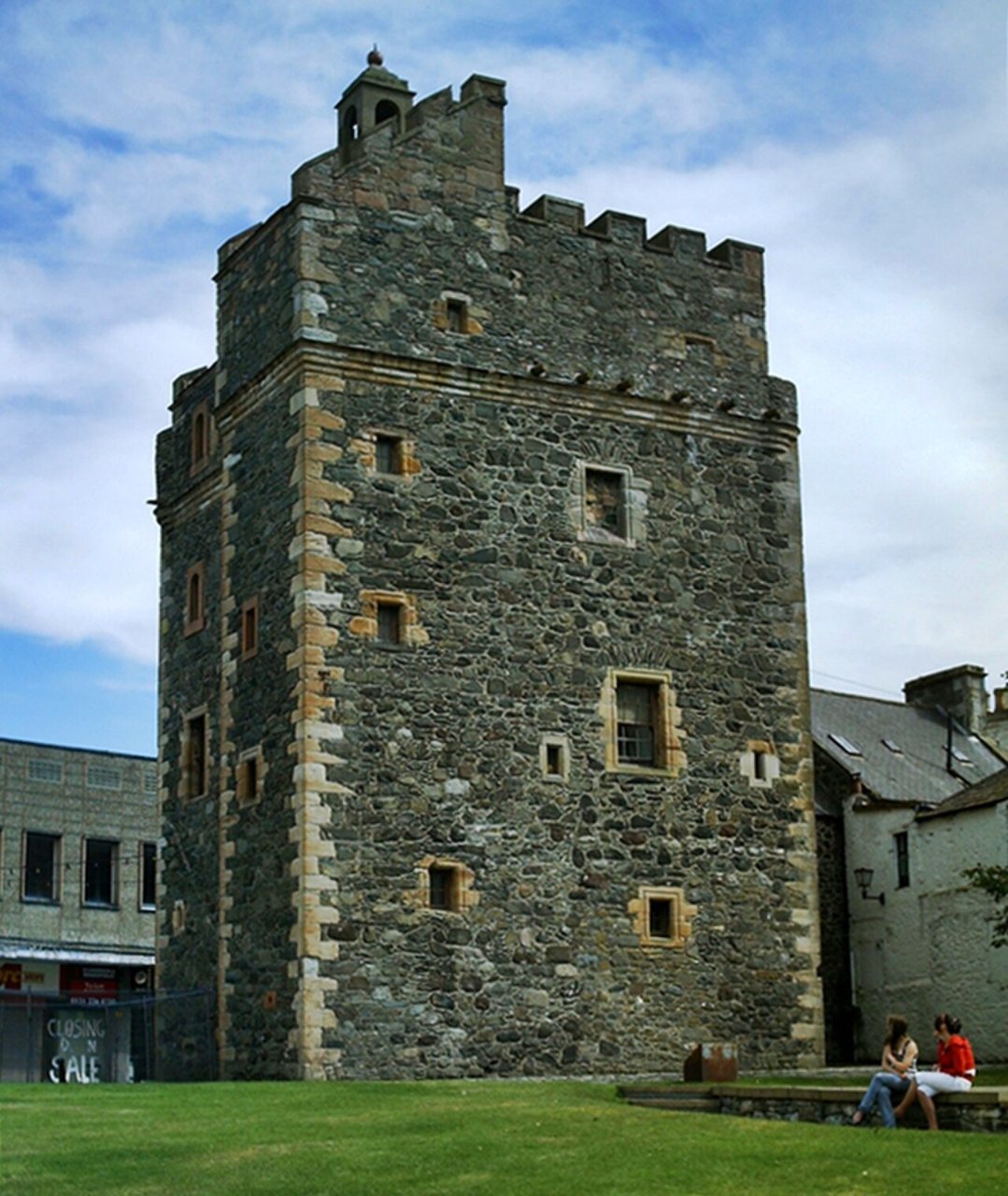
The Castle of St John stands in central Stranraer rather than on an isolated hilltop. That setting makes it a useful starting point for looking at the town: a tower that once expressed a family's position now sits among streets used for shopping, work and everyday journeys. Begin by viewing it from the surrounding public space, then decide whether an interior visit fits your plans. The exterior alone provides several questions worth taking to a museum or historical record.
Start with the building's changing jobs
DG Culture dates the tower to around 1500 and associates its construction with the Adairs of Kilhilt. Its later history includes use as a government military garrison in the late seventeenth century and as a jail during the Victorian period. These are different uses of one durable structure, rather than evidence that it was originally designed solely as a prison.
Keep that sequence in mind when looking at doors, windows and rooms. An opening that appears functional today may belong to a later adaptation. A small sketch with separate notes for the early residence and later institutional uses is more useful than assigning every visible feature to a single century. Where interpretation does not settle a date, leave the question open.
Look at a tower as a home as well as a stronghold
Height and thick masonry give a tower house an imposing appearance, but its occupants also needed places to cook, store goods, receive visitors and sleep. Look for how the building stacks space vertically. Consider how movement between floors would affect a household carrying food, fuel or other everyday supplies.
From outside, compare the size and placement of openings without assuming that every small window was a defensive feature. The relationship between solid wall and usable interior space is part of the story. A distant photograph records the tower's place in the streetscape; a closer view can record masonry or an opening. Neither requires climbing a wall or entering a restricted area.
Check the practical limits of an interior visit
Use the current DG Culture venue information before travelling specifically to enter the castle. Opening arrangements and event programmes can change, so an old photograph of an exhibition or a previous year's listing is not an admission guarantee.
The venue describes level access to the ground floor, with the upper areas reached by the original steep spiral staircase. It also states that there are no toilet facilities in the castle. Anyone for whom steps, confined stairs or a nearby toilet affect the day should ask the operator about current arrangements before committing to a visit. An exterior stop can still form part of a town walk when the interior does not suit the group.
A couple of practical questions
Is this the same place as Stranraer Museum?
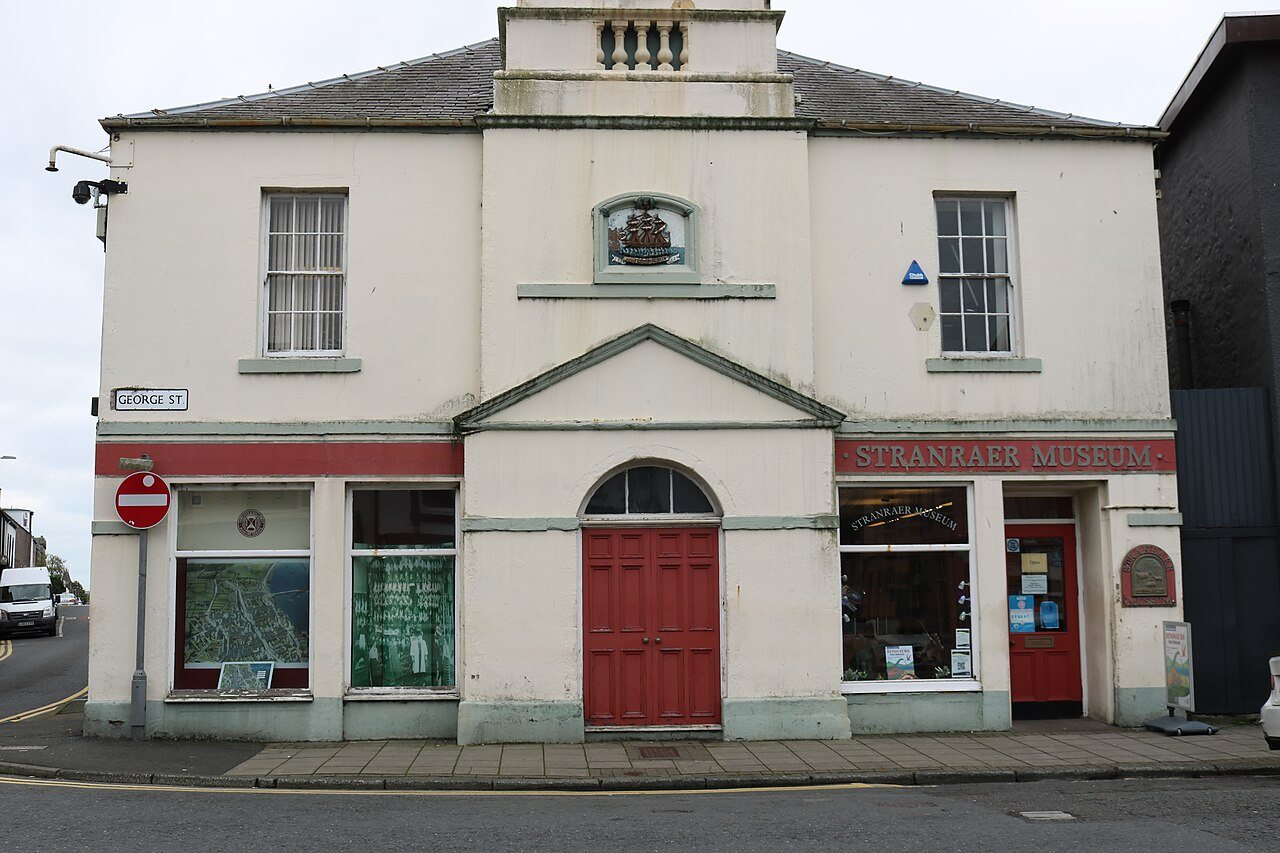
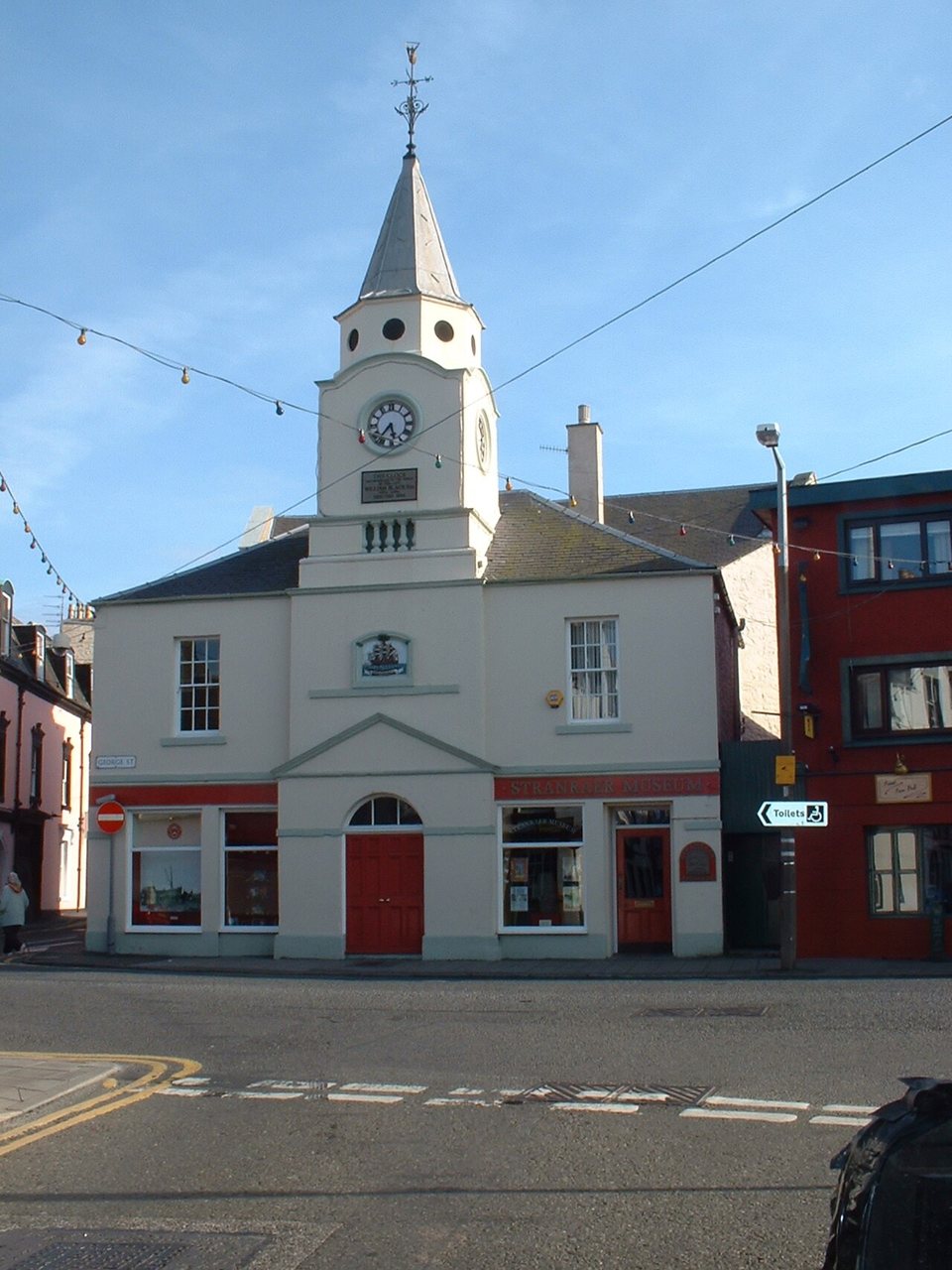
No. The castle is a tower house in the town centre; Stranraer Museum occupies the Old Town Hall on George Street. Check the separate venue pages if you intend to visit both rather than treating one opening notice as covering the other.
Do I need to go upstairs to appreciate the castle?
No. Its external form and position within the modern town already offer a useful introduction to tower-house history. Interior interpretation may add detail when accessible and open, but you can plan an exterior look without promising a stair climb to everyone in the group.
.jpg)
.jpg)
.jpg)