
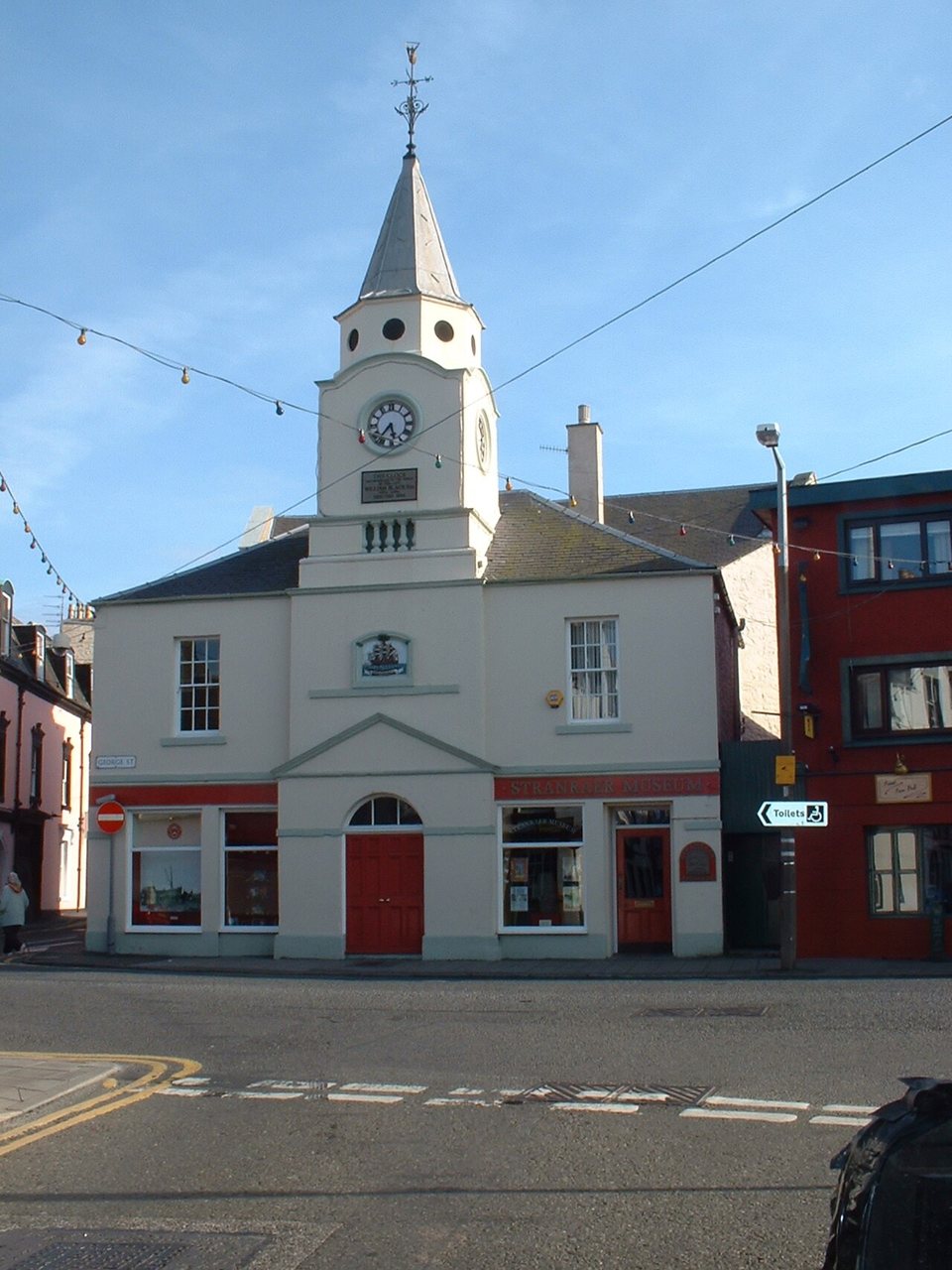
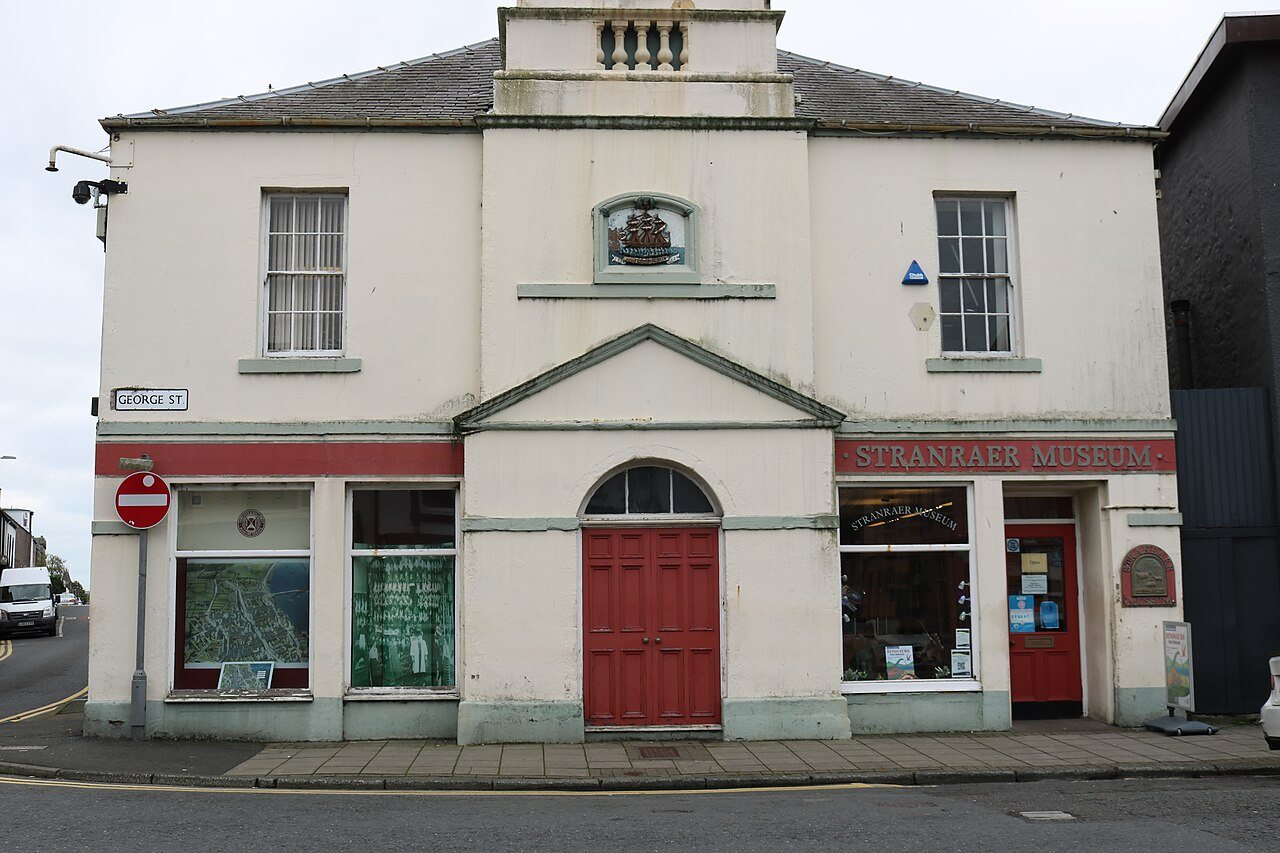
The Old Town Hall at 55 George Street has more than one story to tell. It now houses Stranraer Museum, while its architecture and documented alterations point to earlier civic uses. An exterior look becomes more informative when you separate the original building, subsequent additions and the features installed much later.
Start with the entrance and its emphasis
Look at the front from a safe position across the street. The central entrance is given emphasis by the structure above it, including the clock and belfry. Compare that vertical feature with the relatively compact building below. Draw a rough outline if it helps: the exercise makes you notice proportions that a quick photograph can miss.
The heritage record describes a late eighteenth-century building with a nineteenth-century rear extension. It also records a much later clock presentation. These separate dates matter: a feature that looks established is not necessarily part of the original design. Use the record to test impressions rather than assigning a date from appearance alone.
Follow the changing public roles
Historic Environment Scotland records the rear addition's use as a courtroom and corn exchange. Subsequent uses included a drill hall and armoury, an Athenaeum, and space for the town's early firefighting equipment. This sequence shows how a public building can keep serving a community while its tasks change.
Try pairing each documented use with a question. How would people enter for a meeting? What kind of space would a courtroom require? Where might equipment need a broad opening? These are prompts for observation, not proof that every surviving doorway belonged to a particular activity. Alterations can remove or disguise earlier arrangements.
The building's present museum role adds another layer. Displays can help interpret local history, but modern fittings should not automatically be read as historic civic interiors. A museum inside an old building and a completely preserved original interior are different visitor experiences.
Include the surrounding street
Walk a little way along George Street and look back. Consider how the building addresses the pavement and how its frontage compares with neighbouring properties. Avoid standing in the roadway for a perfectly centred view. A slightly angled photograph can still show the entrance, clock and relationship to the street clearly.
Finish by noting one feature and one verified date, instead of trying to memorise the full succession of uses. If you want to go inside, check the museum's current arrangements. The historic building record explains significance; it does not confirm today's opening hours or which rooms visitors can enter.
A couple of practical questions
Is this the same building as Stranraer Museum?
Yes. The museum occupies the Old Town Hall on George Street. Older references to later town-hall or courthouse buildings concern different stages of the town's civic history, so check the address when comparing photographs.
Can I learn something when the museum is closed?
The public street offers a view of the exterior. Study its outline and frontage without entering restricted areas, then use the heritage record to connect visible features with documented changes.

.jpg)
.jpg)