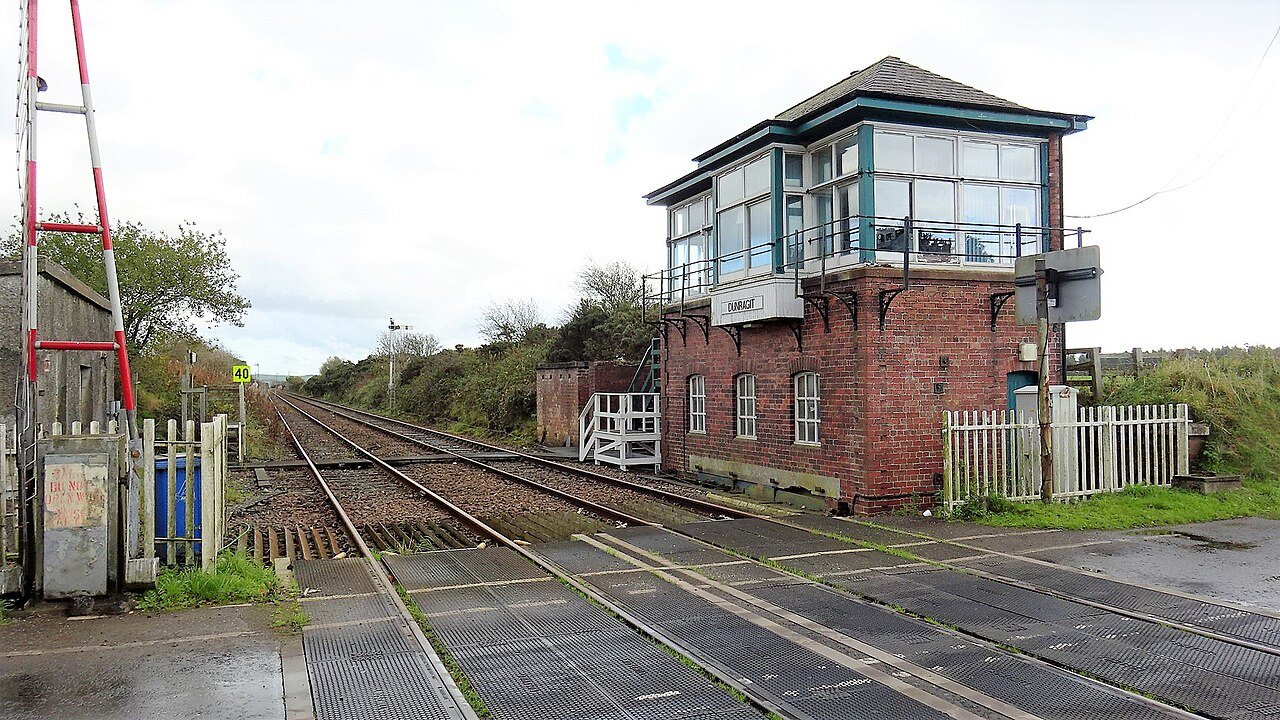
Dunragit may look like a small settlement on a road journey, yet investigations for the A75 bypass revealed a much longer human history. The archaeology is a reason to look beyond today's road layout. It also offers a useful lesson in how buried evidence can transform understanding of an apparently ordinary landscape.
Start with what the excavators found
Transport Scotland records finds spanning the Mesolithic, Neolithic, Bronze Age and Iron Age. These include stone tools, burial evidence, a jet necklace and settlement remains. The significance lies in the sequence of activity across many periods, rather than the idea of one lost village discovered intact.
GUARD Archaeology's publications provide an account from the team that investigated the bypass route in 2012–2014. The general-reader booklet is a sensible starting point; the monograph offers more detail if you want to understand dating, excavation areas and how interpretations were reached.
Do not confuse a buried site with a visitor attraction
Excavated remains may have been recorded, sampled, conserved or covered, and a published plan can show features that are no longer visible on the ground. Arriving with an expectation of open trenches or reconstructed houses is likely to misread the nature of the project.
A map of discoveries helps explain the wider area, but it is not an invitation to enter fields, roadside works or private land. Do not collect apparent fragments or investigate disturbed ground. Archaeological value depends partly on context, which can be lost when an object is removed from its position.
Connect the evidence to the present landscape
Look at Dunragit as a place where transport, settlement and land use have repeatedly changed. The bypass itself is a recent layer in that story; its construction created the opportunity for investigation. Modern infrastructure and ancient history are therefore connected in the evidence you are reading.
For an outing, combine reading with a short, lawful village stop or a separately planned visit nearby. Glenwhan Gardens is another destination in this area, but has its own entrance and terrain. Let each stop retain a clear purpose instead of searching for every archaeological feature mentioned in a publication.
A couple of practical questions
Are the bypass excavations still open to visitors?
The publications describe an archaeological investigation undertaken before and during road construction. Do not assume an active excavation or public archaeological park exists at the recorded locations.
Where should a non-specialist begin reading?
The excavation team's general-reader Dunragit booklet is an accessible starting point. Use the detailed monograph when you want more evidence behind the dates, site plans and interpretations.