Glenwhan Gardens near Dunragit offers a different garden story from an old estate landscape. Its creation developed from the work of Tessa Knott-Sinclair and her family on a difficult moorland site. Today a visit can focus on the decisions that connected water, planting and views, rather than only collecting the names of flowers.
Look at how a garden was made
Historic Environment Scotland's account describes the transformation beginning in the late twentieth century, with shelter planting, soil improvement and the creation of water features. That background changes how you read the garden: trees and shrubs can be infrastructure as well as attractive specimens.
Notice where the planting closes around you and where the view opens. A shelterbelt can make a more protected space inside, while an outlook towards Luce Bay keeps the wider landscape present. These relationships help explain why a garden on exposed ground can contain such varied experiences.
Let water connect the planting
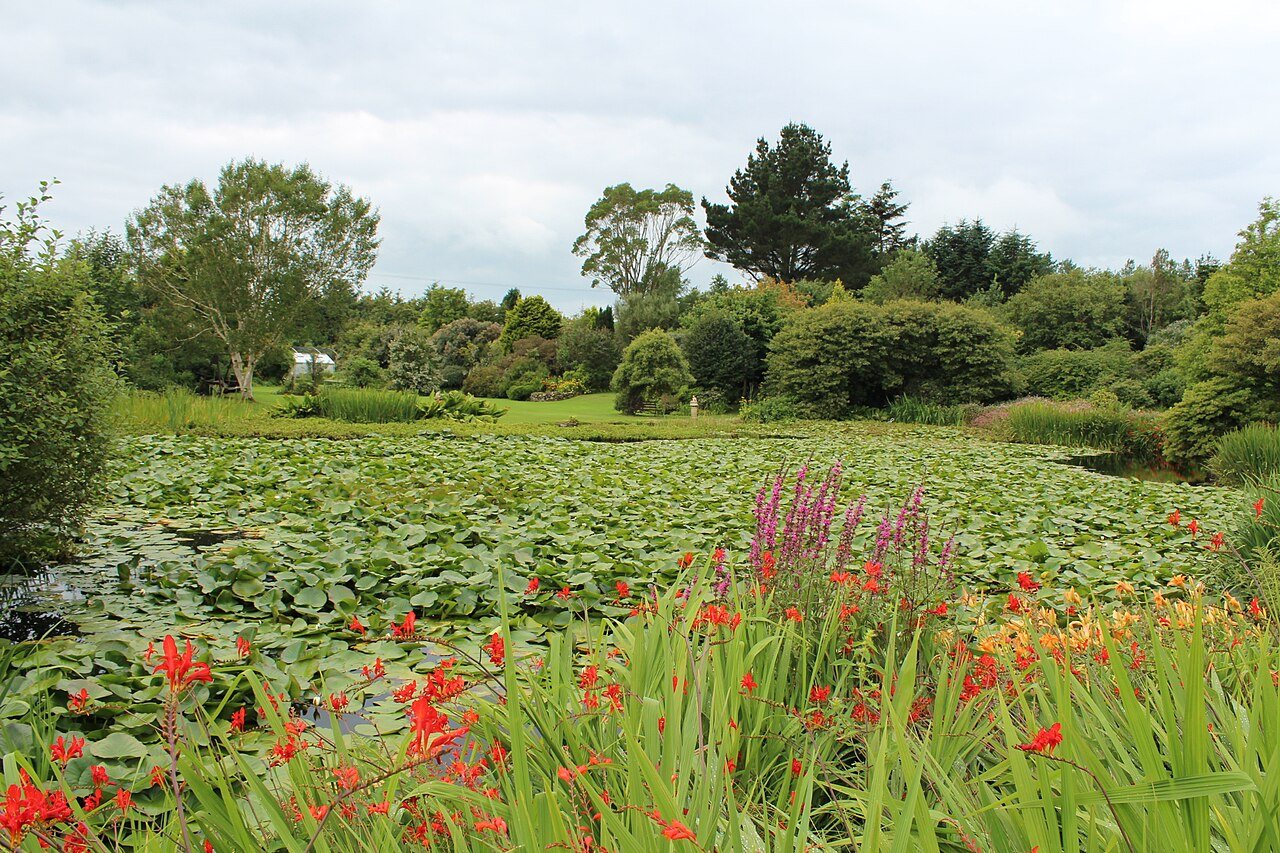
The garden's ponds and watercourse provide more than a surface for reflection. They draw the eye, divide the ground and create opportunities for contrasting planting. Compare how the banks are used rather than assuming every plant near water has identical growing needs.
If you take notes, record where a plant sits in relation to shade, shelter and water as well as its name. A photograph of a flower alone loses much of that context. Stay on the visitor paths, especially near pond edges, and let wildlife use the water without attempting to attract it closer.
Plan around mixed terrain
The operator describes the garden as partly accessible by wheelchair because of its varied terrain. Ask about the particular paths and features you want to reach if surface or slope is important. The presence of benches can help pace a visit, but does not make every connecting path suitable for every visitor.
Check current admission and refreshment arrangements directly. A garden visit outside the main tearoom season can be a different experience from one with an indoor break available. Pick a route that leaves enough energy for the return, and choose another visit for areas that do not fit comfortably into the day.
A couple of practical questions
Is Glenwhan an eighteenth-century estate garden?
Its principal garden creation is much more recent. The heritage account describes Tessa Knott-Sinclair's evolving work from moorland into a garden, with shelter planting and ponds central to its development.
Does partly accessible mean I can reach every feature?
No. Discuss your intended route with the garden. Mixed ground, slopes and path surfaces need to be considered individually rather than inferred from the general description.