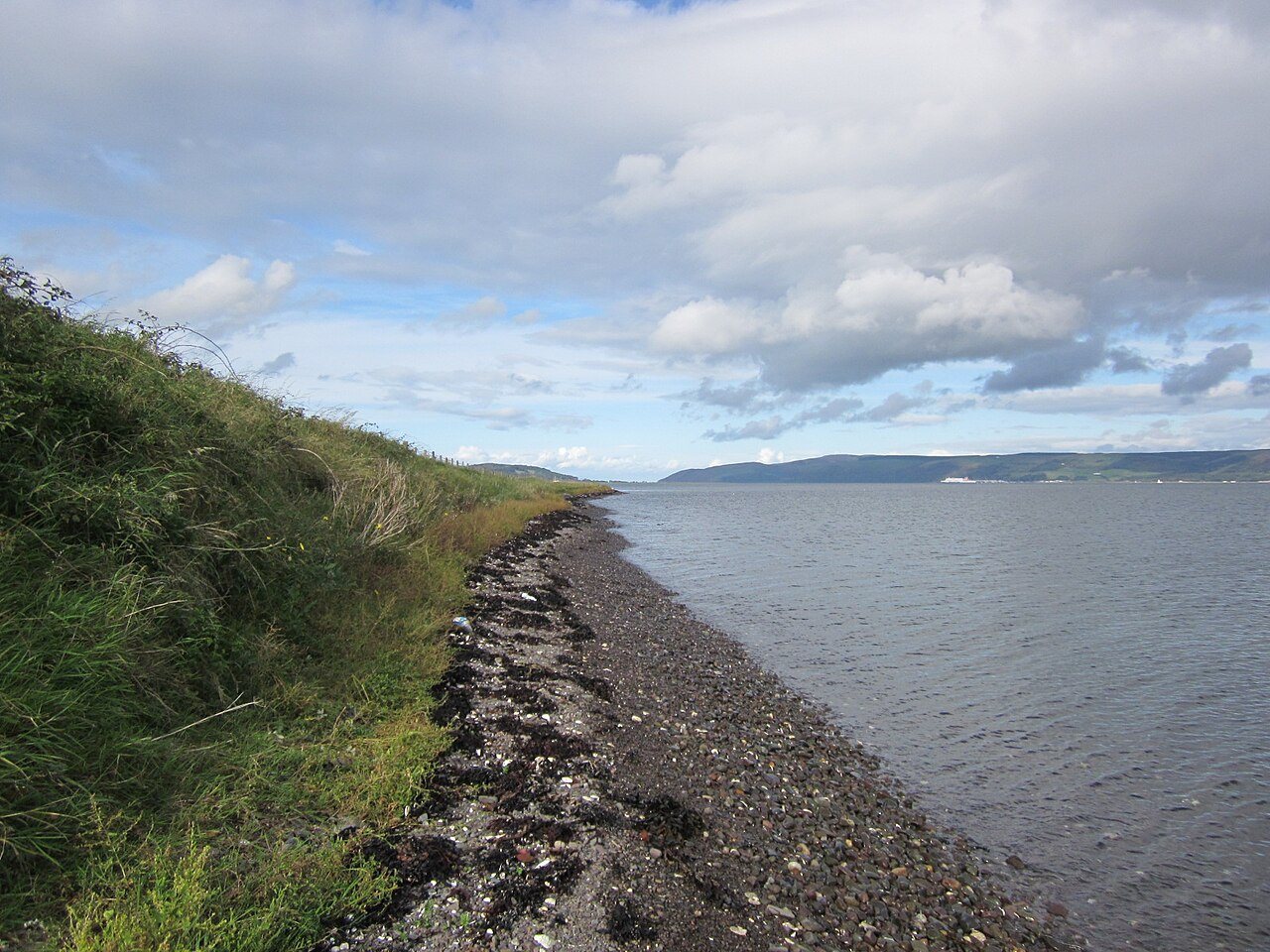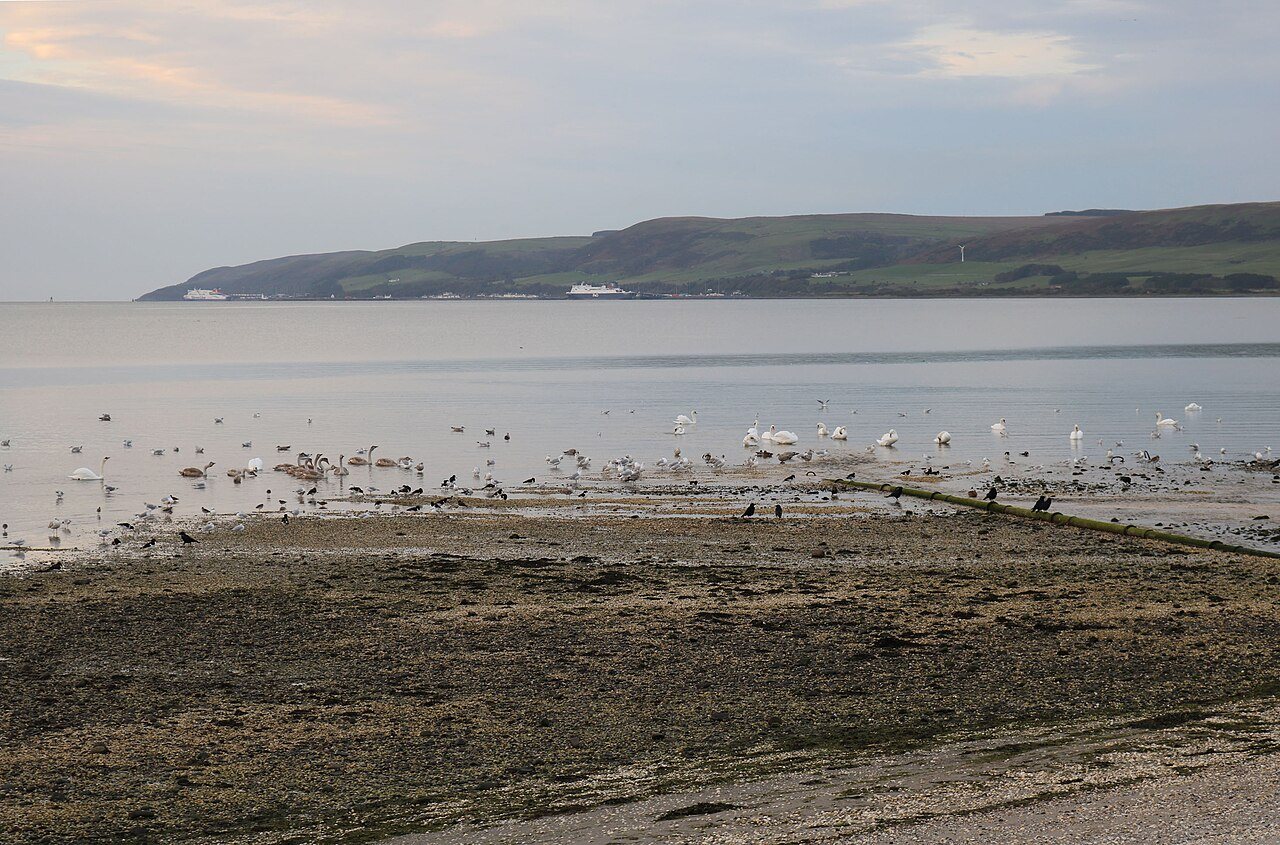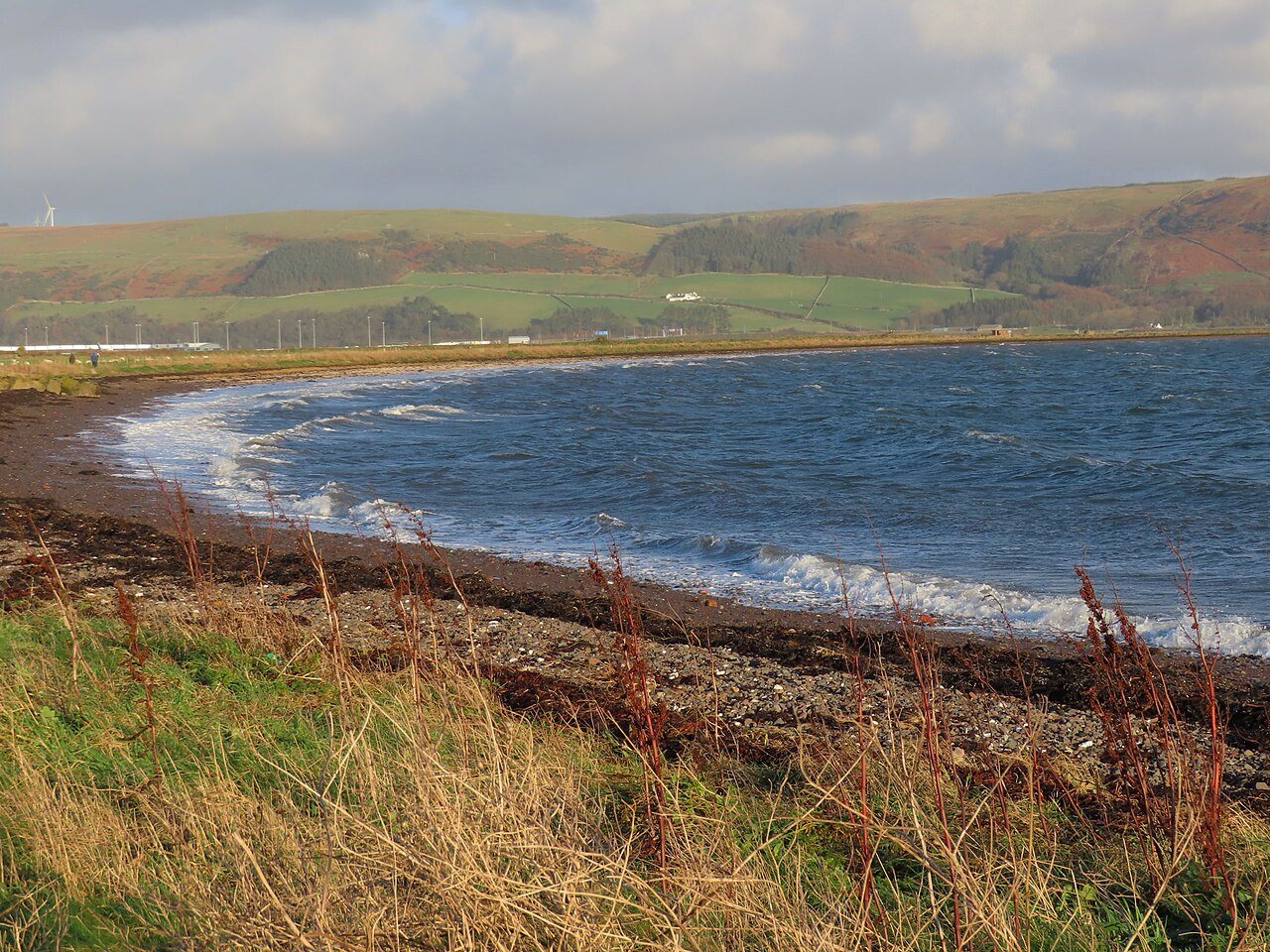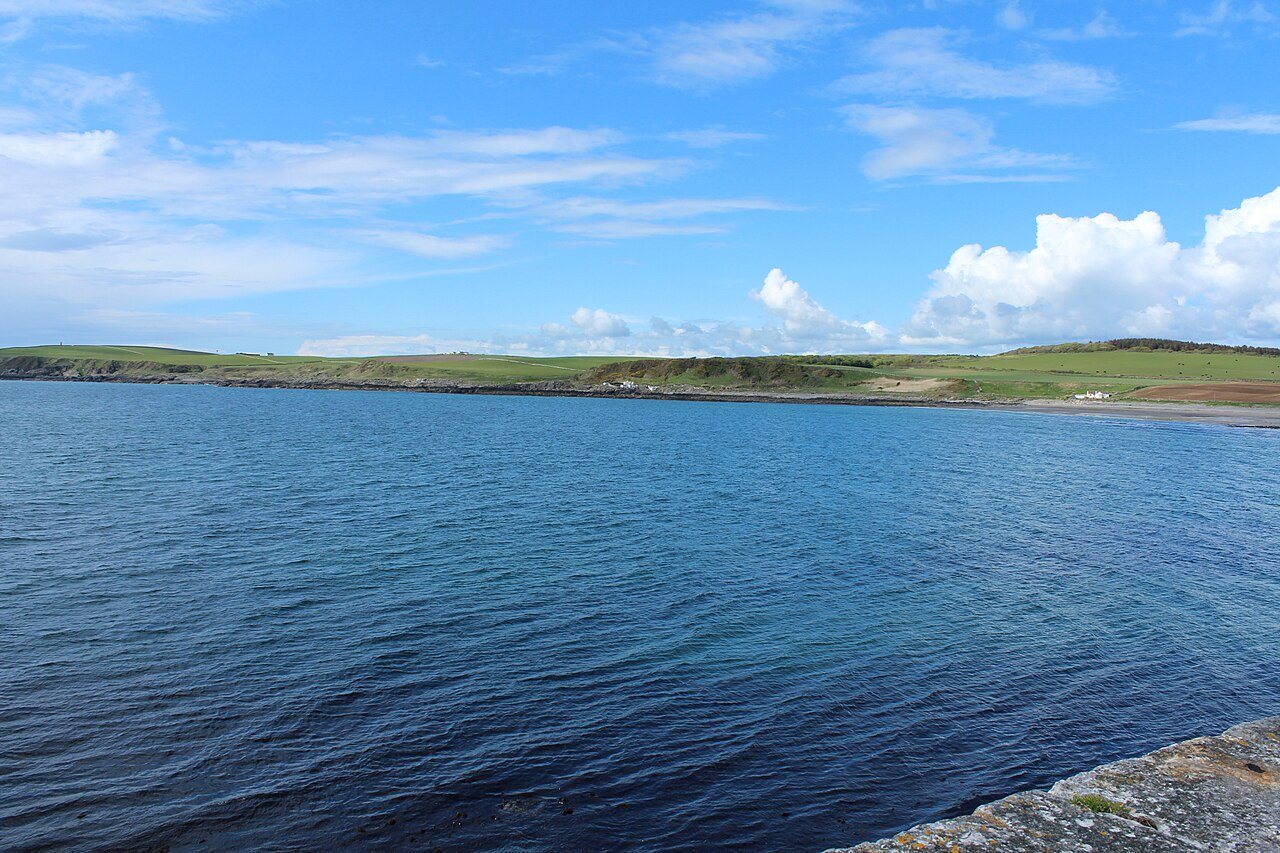
Port Logan Bay is larger than the village at its southern end might suggest. Looking at its shape gives a different purpose to a visit from simply photographing the bell tower. The relationship between the enclosed harbour works, broad beach and surrounding land can explain both the appeal and the exposure of this western-coast setting.
Begin with a wide view
From a suitable public viewpoint, identify the village, pier and sweep of the shore before going down onto the sand. This gives you landmarks for the return and helps distinguish the bay as a whole from the smaller part you intend to walk.
Notice where buildings sit in relation to the water and road. The settlement's historical development involved attempts to improve the harbour, but a built quay cannot shelter the entire bay. A quiet-looking corner should not be used to judge conditions farther along the coast.
Watch the changing edge
The tide reveals and covers different parts of the beach, altering the apparent curve and width of the shore. The dark line of damp sand or stranded seaweed can help you notice change, but it is not a prediction of the next high-water position. Use current tide information for that decision.
If you walk, keep the return route in sight and avoid rounding rocks merely to see what lies beyond. The RNLI's tide guidance explains why moving farther up a beach is not always an available escape. A bay can have sections where cliffs or obstacles limit the way inland.
Compare human works with the wider coast
The village history describes the nineteenth-century quay and bell tower, and ambitions for further harbour protection that were not realised. Read those features as responses to the coast's practical demands. They help explain why a picturesque harbour is also an engineering story.
For photographs, take one wide view showing the bay's shape and another showing how the pier and tower fit into it. Stay on stable ground and avoid backing towards an edge while framing. A patient look from one position can reveal more about the shoreline than a long walk undertaken without a clear tide or return plan.
A couple of practical questions
Can the bay's shape tell me whether it is safe to swim?
No. A visual impression of shelter does not establish water safety, currents, supervision or local conditions. This introduction is about observing the landscape, not assessing a swimming location.
Is the pier a good place in every weather?
No. Assess wind, waves, wet surfaces and access notices. Use an inland public viewpoint when conditions make the pier or shore edge unsuitable.