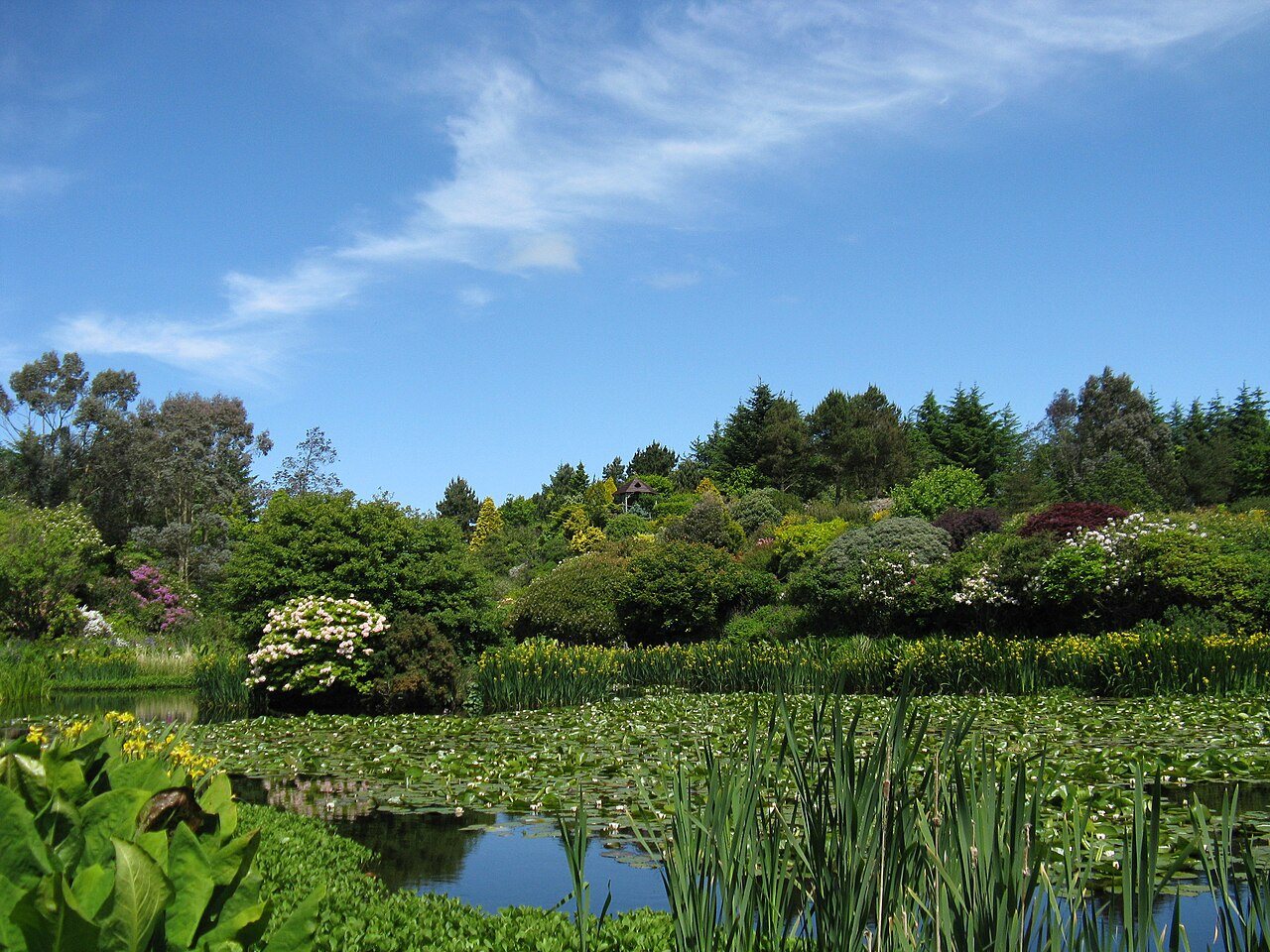
Early summer can be a rewarding time to explore gardens on the Rhins, but it is better to plan around the character of a garden than a promise of one flower at its peak. Logan, Castle Kennedy and other gardens offer different layouts and collections. Choose a main destination, read its current visitor information and allow enough time to notice more than the first colourful border. Weather and the progress of the season can alter what is flowering.
Decide what kind of garden visit you want
Logan's botanic collection offers named plants and geographical connections, with striking foliage as well as flowers. Castle Kennedy combines planting with a designed landscape, avenues and the old castle ruin. These are different experiences even when both include summer colour.
For a limited day, one garden may deserve the available time more than a rapid circuit of several entrances. Think about walking distance, seating and the group's interest. Check access information for the areas you most want to see, rather than assuming the whole garden has a single surface or gradient.
Use seasonal notes as a guide, not an appointment
RBGE's Logan seasonal information describes summer interest in foliage and flowering collections. Castle Kennedy's history also identifies late-spring and early-summer colour among its collections. Exact timing varies, so a date in an article should not be treated as a guarantee of peak bloom.
When a hoped-for flower is absent, look for another stage: new growth, a seed head, bark or the relationship between plants. Read labels and record an exact name if you want to compare a future visit. Avoid touching or moving a plant to improve the photograph.
Give the visit a comfortable rhythm
Start with one chosen area and build a pause into the route. Take weather protection and water, and check the current food and toilet arrangements before relying on them. A garden is outdoors even when its planting looks sheltered.
Leave enough time to return without hurrying through the final sections. Afterwards, select two or three photographs with useful notes rather than keeping only a large collection of unlabelled close-ups. The visit can then become a record of how the garden works, not just a memory of a colourful day.
A couple of practical questions
Should I visit several gardens on the same day?
Only when the journeys and available time leave room to enjoy them. One unhurried visit can be more informative than several brief stops, particularly if walking or access needs affect the pace.
Can an early-summer visit still be worthwhile after rain?
Possibly, if the garden is open and conditions suit the group. Check current information and surfaces. Rain may change the experience, but strong wind or other severe conditions can require a different plan.