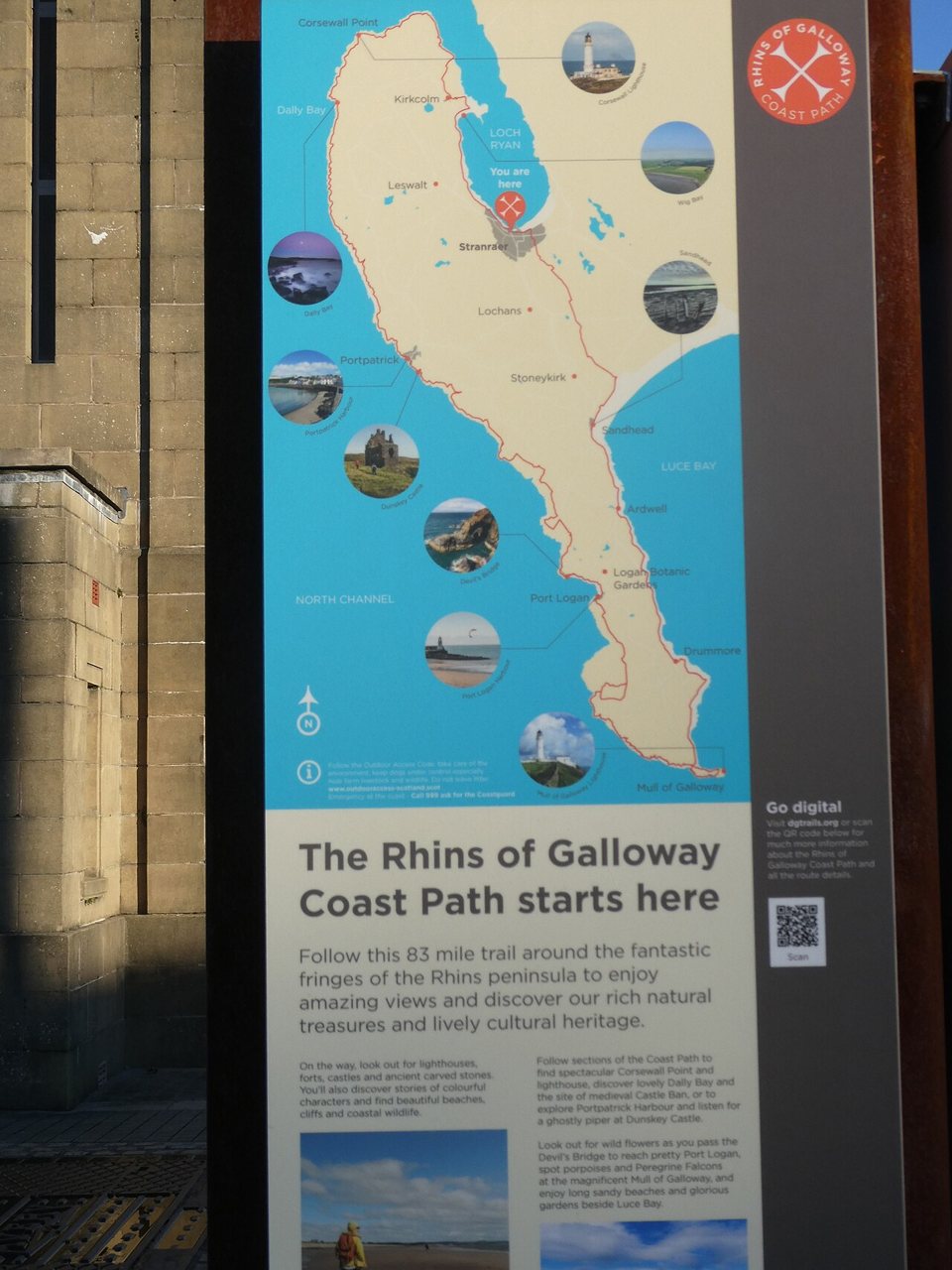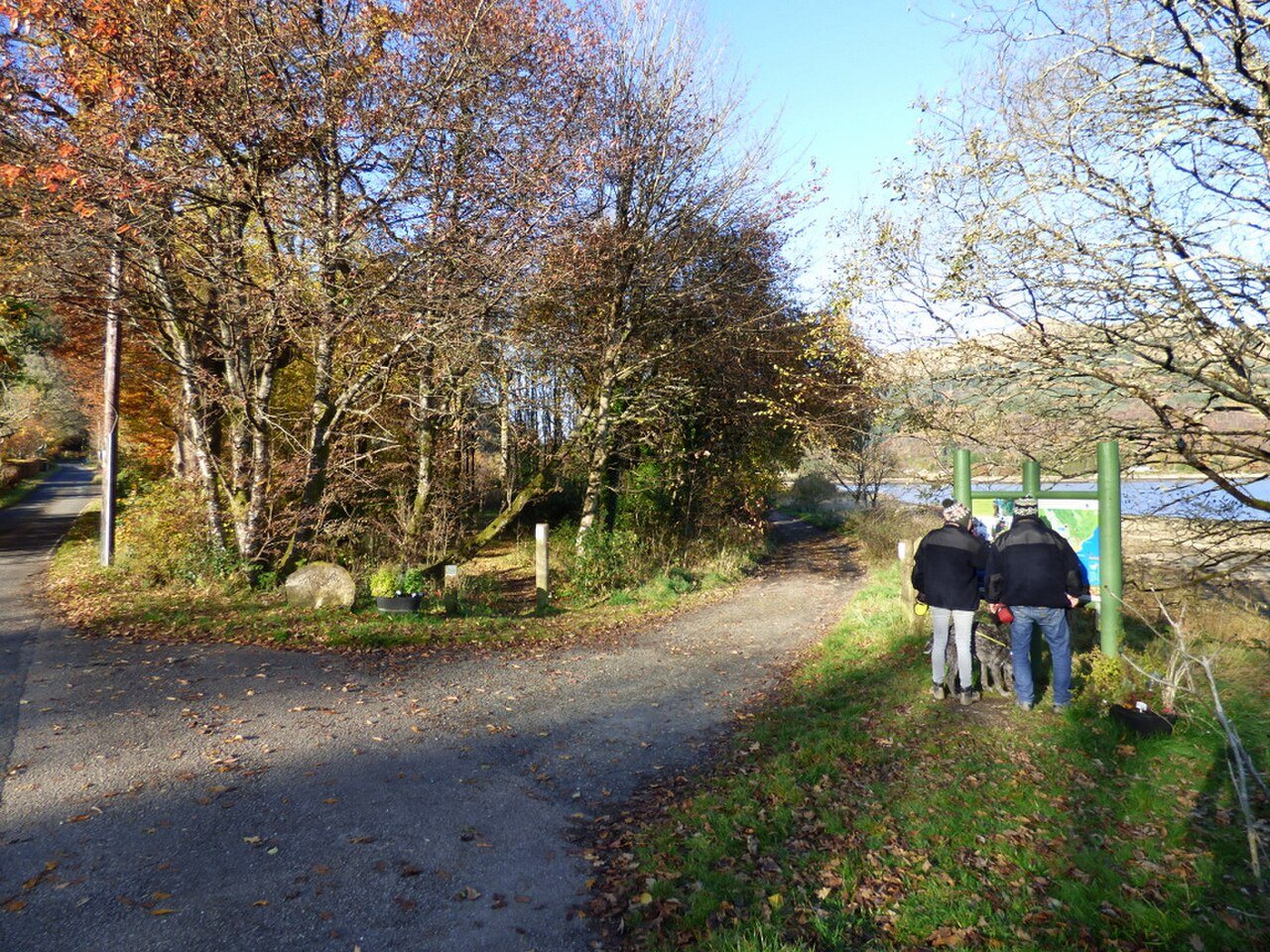
Two walks of the same published length can offer very different choices during the day. An out-and-back repeats a path and lets you turn earlier. A circuit brings changing scenery but may commit you to a section you have not yet seen. Around the Rhins, where exposure and surfaces can change between coast and inland ground, that difference is often more useful than a debate about which type of walk is more interesting.
The flexibility of retracing your steps
An out-and-back works well when the group wants to decide its distance gradually. Start with a turning time and one optional landmark, leaving enough margin for the return. Keep noting landmarks behind you: a junction or field entrance can look unfamiliar from the opposite direction.
Repeating a path does not mean repeating the same experience. Light, tide and the direction of the view change. However, the way back may face a headwind or feel harder when people are tired. Do not assume that the time used going out exactly predicts the time coming back.
The commitment within a circuit
A circular route can remove the need for transport between endpoints and avoid a repeated stretch. Before choosing one, read the whole description. Find out whether a rougher section, road connection or exposed part appears near the end, when it is too late to return by a short route.
The official Rhins Coast Path site lists five short circular walks, but each still needs an individual assessment. A line that closes neatly on a map says nothing about gate access, muddy ground or the suitability of a connecting road for your group.
Decide where adaptation is possible
Mark the point where you could sensibly shorten the outing, if one exists. If no alternative is described, treat the circuit as a full commitment rather than improvising a shortcut across unfamiliar land. Farm work, fences or a steep gully can make an apparent map shortcut impractical.
Tell everyone whether the plan is a circuit or a return on the same path. This small distinction helps children, companions and the person expecting your return understand what happens if the weather worsens. Choose the shape that supports that day's needs, and leave a different route for another visit.
A couple of practical questions
Is an out-and-back the safer option in every case?
No. It may offer easier shortening, but the route itself still has to suit conditions and ability. Tidal access or an awkward obstacle can affect both the outward and return journeys.
Should a circuit be walked in a particular direction?
Use the current route guidance where a direction is recommended. Otherwise consider exposure, gradient and transport timing, and avoid assuming that reversing a route leaves every practical detail unchanged.