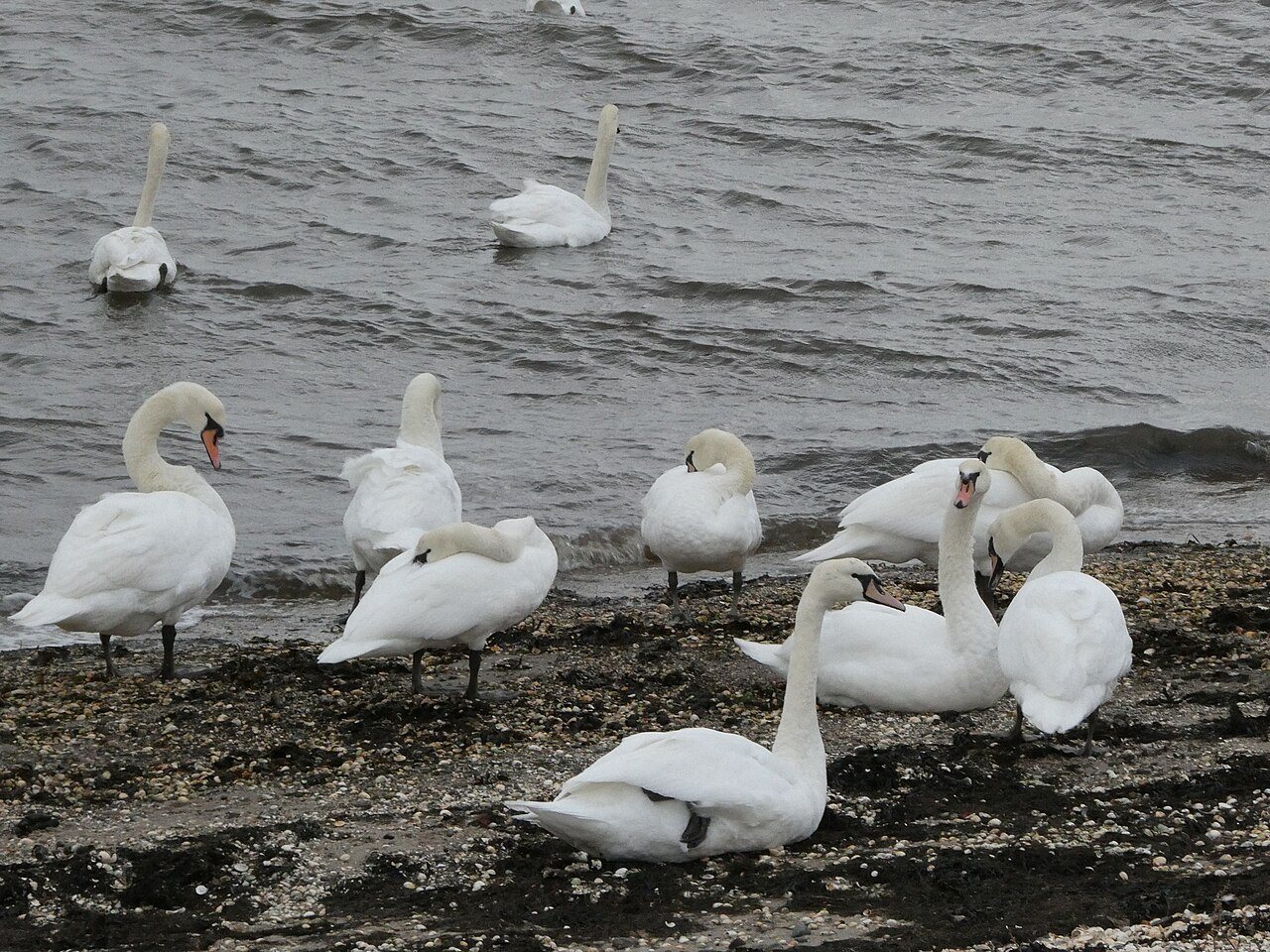
Watching coastal wildlife is not simply a matter of finding a clear view. Birds may be feeding, resting or breeding, and repeatedly making them move can interrupt those activities. Around Loch Ryan and the Rhins, begin by observing from an established path or suitable viewing place. Let the animal's behaviour determine whether your position is acceptable, rather than relying on a fixed distance that ignores the circumstances.
Notice the response, not just the subject
A bird that raises its head, becomes alert or moves away as you approach is giving useful information. Stop and retreat if your presence is disturbing it. If a whole group takes flight, the opportunity for a photograph was already too close. Waiting quietly further away often provides a better view of natural behaviour.
Keep dogs under control and away from shorebirds. The same shore that appears convenient for exercise may be an important feeding or resting place. Do not assume that wildlife is unaffected because it has not immediately flown away.
Use distance as part of the method
Binoculars and a longer lens help you remain back. Find a steady position without leaving a path for a closer angle or trampling plants around a viewpoint. Never use food, calls or repeated approach to make an animal perform for the camera.
When several people are watching, keep voices low and avoid surrounding the subject from different directions. Leave it a clear route away and do not follow after it moves. The Birders' Code and Scottish Outdoor Access Code both place responsible behaviour ahead of the desire to see more.
Leave the place ready for the next visit
Take litter, fishing-related debris you can safely handle and food waste away. Do not disturb nests or collect natural objects from sensitive areas. Read current signs, including seasonal requests, because local circumstances can change.
A useful record contains the approximate place, time, habitat and behaviour seen from your chosen position. Be careful about publicly sharing precise locations of vulnerable nesting wildlife. A quiet observation of ordinary birds feeding normally tells you more about the coast than a dramatic image produced by making them scatter.
A couple of practical questions
How far away should I stand?
There is no single distance that suits every species and situation. Start well back, use optics and retreat if your presence changes the animal's behaviour. Follow any specific local guidance.
Can I move closer once I have waited quietly?
Waiting does not grant permission to approach. Keep judging the response and remain where the animals can continue their activity without being disturbed.