
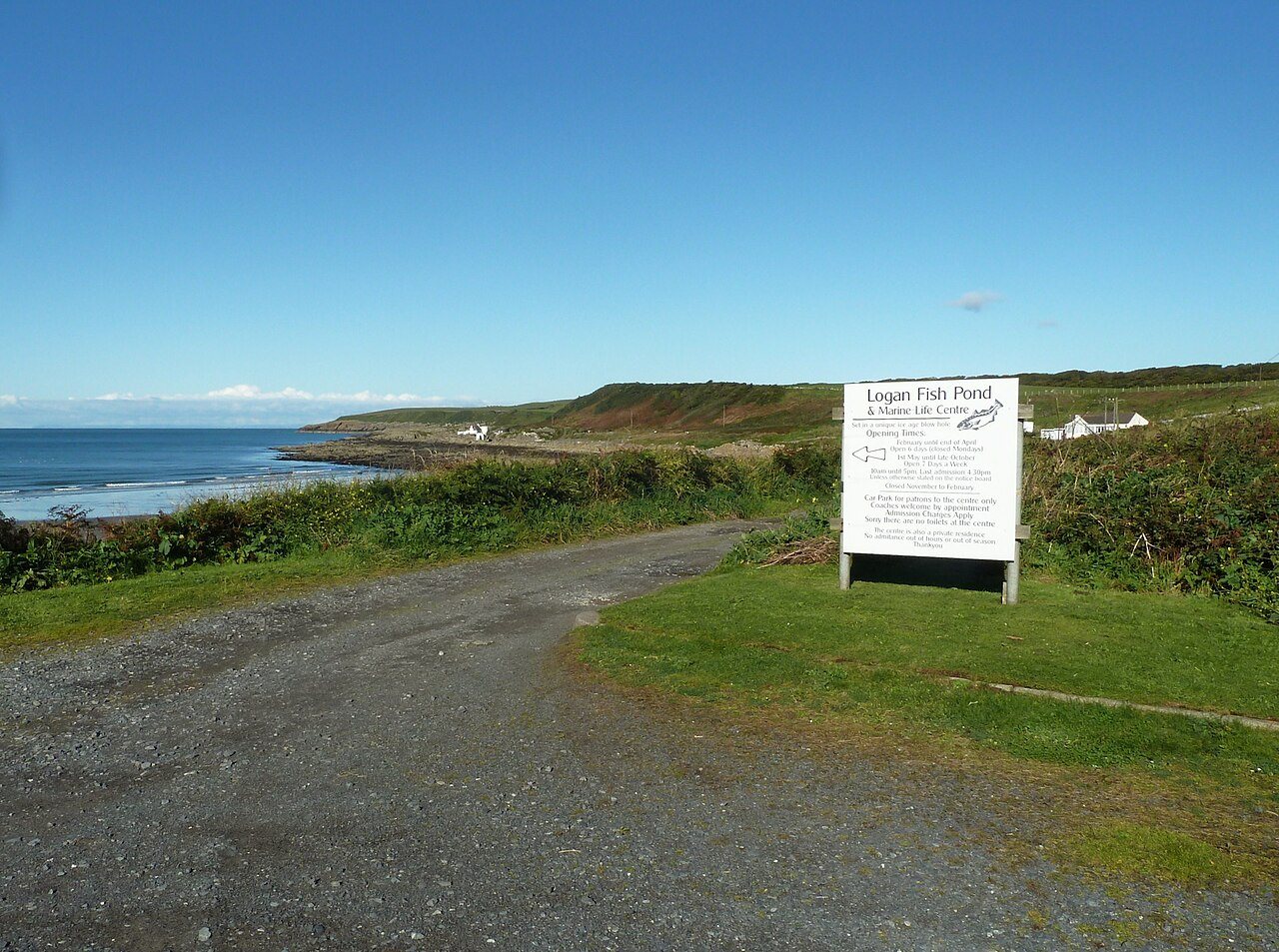
Logan Fish Pond, near Port Logan, is an unusual place to think about the relationship between a household and the sea. Its basin uses the coastal rock and tide, but its historical purpose was deliberately practical: to keep live fish available for Logan House. Understanding that function makes the walls and water connection easier to read.
A natural setting put to a specific use
Historic Environment Scotland dates the construction to 1788–1800 and attributes it to Colonel Andrew McDouall of Logan. The basin was excavated or blasted from the rock. Seawater enters through a natural cleft, while the surrounding structures helped retain fish. This combination of natural feature and human alteration is central to the site's interest.
Imagine the difference between keeping fish alive and storing a catch after it has been landed. The pond belongs to a history of food supply as well as to coastal scenery. Avoid assuming that every coastal pool served a similar purpose; the documentary record is what identifies the use here.
Read the buildings as part of the system
The heritage listing includes the pond, adjoining keeper's cottage and a separate bathing hut. Steps and an entrance structure connect people with the basin. Notice how the practical requirement to reach the water influenced the arrangement, while decorative features gave the place a more elaborate appearance than a simple storage enclosure.
Keep the separate functions in mind. A bathing hut in the historical group does not establish that the fish pond is a swimming place today. Equally, a historic description of steps or a doorway is not confirmation that visitors can currently use them. Follow the site's actual visitor route and instructions.
Distinguish historical accounts from today's experience
Later accounts describe the pond becoming an attraction and fish responding to the keeper. Read such descriptions in their own period. They help explain the site's reputation, but do not promise a particular animal encounter or activity for a present visit.
Check current opening, tickets and access with the operator before making a special journey. Ask about steps and surfaces if those affect your group. Do not feed fish or reach into the water unless an authorised member of staff specifically directs a permitted activity.
Keep the coastal approach in proportion
The fish pond appears on the official Portpatrick-to-Port Logan coast-path description, but that entire stage is a long walk. A visit to Port Logan and the pond should be planned as its own outing unless you have prepared for the full route. Leave time to understand the setting rather than squeezing it between distant stops.
A couple of practical questions
Was the pond originally built as an aquarium?
Its recorded original purpose was to provide fresh fish for Logan House. Its later appeal as an attraction is a different stage in the site's history.
Is it simply an ordinary rock pool?
The rock and tidal connection are natural elements, but the basin and surrounding structures were adapted for a specific use. Read it as a designed system within a coastal setting.

.jpg)
.jpg)